

If you’ve ever looked at food packaging and wondered, “Is this really compostable?” you’re not alone.

Terms like *biodegradable*, *plant-based*, and *eco-friendly* are everywhere. Unfortunately, they don’t all mean the same thing.

For foodservice operators trying to make better packaging decisions, understanding the difference matters.

Not Everything That Breaks Down Is Compostable

Eventually, almost everything biodegrades. The question isn’t whether something will break down someday. The question is:

  • How long does it take?
  • What conditions are required?
  • What remains afterward?

A piece of conventional plastic may slowly fragment over many years. That doesn’t make it compostable.

Compostable products are specifically designed to break down in composting environments and leave behind materials that can safely return to the soil.

That’s an important distinction.
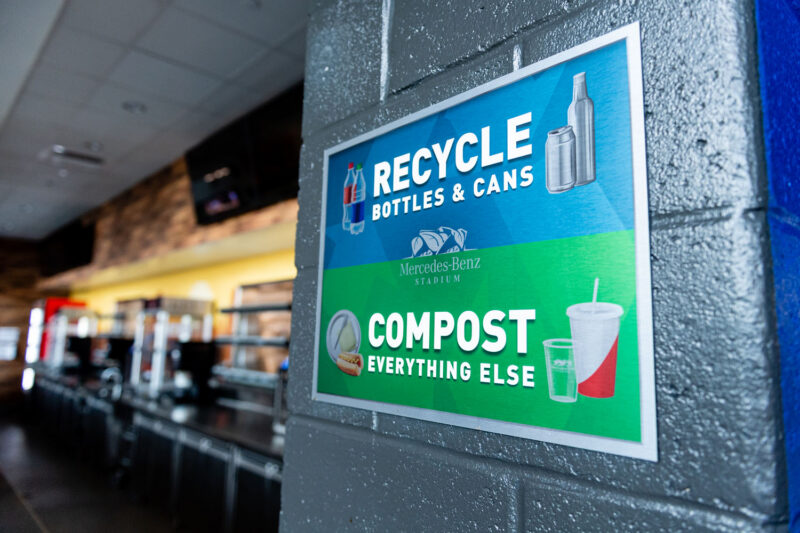
Not all products marketed as “green” are truly compostable. Certification and proper end-of-life pathways matter.

Why Standards Matter

In North America, compostable plastics intended for commercial composting facilities are typically evaluated against standards such as ASTM D6400 and ASTM D6868.

These standards assess multiple factors, including:

  • Biodegradation
  • Physical disintegration during composting
  • Heavy metal limits
  • Ecotoxicity and impacts on plant growth

Certification organizations such as the Biodegradable Products Institute (BPI) help verify that products meet these requirements.

Certification matters because it provides independent validation and helps reduce confusion in the marketplace.

Why Foodservice Packaging Is Different

Foodservice packaging presents a unique challenge.

Takeout containers, cups, plates, and serviceware often become contaminated with food scraps. Once food residue is present, many traditional recycling systems can no longer effectively process the material.

That’s why compostable packaging can play an important role in organics diversion programs.

When certified compostable packaging is paired with food scrap collection, operators may be able to send both the food and the packaging to composting instead of landfill disposal.

The result can be a simpler waste stream and greater recovery of organic material.

Compostable Doesn’t Mean “Throw It Anywhere”

Another common misconception is that compostable packaging simply disappears wherever it ends up.

It doesn’t.

Most certified compostable packaging today is designed for commercial composting facilities that carefully manage temperature, moisture, oxygen, and microbial activity.

In many cases, these conditions are difficult to replicate in a backyard compost pile.

That’s why disposal education matters just as much as packaging design.

Certified compostable packaging can help simplify waste streams by allowing food scraps and packaging to be collected together for composting.

What Foodservice Operators Should Look For

When evaluating packaging, ask a few simple questions:

  • Is it independently certified?
  • Does the product clearly identify itself as compostable?
  • Is composting infrastructure available where the packaging will be used?
  • Will the packaging help divert food scraps from landfill?

The answers to these questions often matter more than broad marketing claims like “green” or “biodegradable.”

The Bigger Opportunity

At Better Earth, we believe compostable packaging works best when it’s viewed as part of a larger circular system.

Packaging isn’t just a container.

Done thoughtfully, it can become a vehicle that helps recover food scraps, supports organics diversion programs, and contributes to healthier soils.

As composting infrastructure continues to grow and regulations around packaging become more sophisticated, understanding the difference between biodegradable and truly compostable products will only become more important.

Because in sustainability, labels matter—but systems matter even more.

Contact Us

Let us know how our Better Earth team can further help you.
We look forward to hearing from you!

Our Locations

Atlanta

715 Park North Boulevard, #100
Clarkston, GA 30021
(844) 243-6333

Chicago

7447 S. Central Ave., Suite A
Chicago, IL 60638
(844) 243-6333

    This site is protected by reCAPTCHA and the Google Privacy Policy and Terms of Service apply.