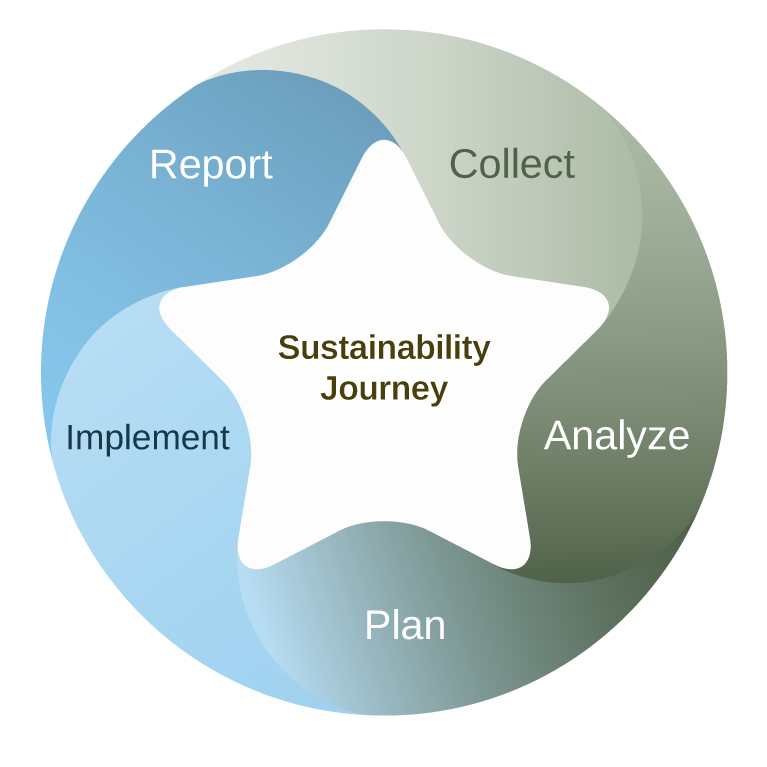
BE_SustainabilityJourney_A

Map Out

Your sustainability journey with Better Earth

Better Earth is your go-to resource for comprehensive sustainability services, offering tailored education, insightful legislative tracking, and consulting to help you achieve your green goals. Stay updated with the latest packaging legislative trends across the United States with our interactive Packaging Legislation Map tool. Simply click on any of the highlighted green states below to dive into more details.

US Legislative Map

Single-Use Plastic Bag Ban.Effective January 1, 2026, SB 1053 mandates that all retail and foodservice businesses only distribute recycled paper bags at the point of sale for a minimum of 10 cents. Single-use and reusable thick film plastic bags are banned. Paper bags must have a minimum of 40% post-consumer recycled materials. Starting January 1, 2028, this number will increase to 50%.

Extended Producer Responsibility. Effective in 2032, SB 54 requires 100% of foodservice packaging to be recyclable or compostable. All producers selling into California are required to participate in a 25% single-use plastic source reduction goal and will pay annual fees on their imports to California to fund recycling and composting infrastructure in the state starting in 2026.

PFAS Regulations. Effective January 1, 2023, AB 1200 bans all plant fiber-based food packaging containing PFAS that are either intentionally added or present at levels exceeding 100 parts per million of total fluorine.

Truth in Labeling Legislation (Recyclables). Effective October 4, 2026, SB 343 restricts how marketers can use environmental marketing claims on plastic packaging. Packaging that is labeled as recyclable with the chasing arrow symbol must be designed for recyclability under the APR Design® Guide, and by 2030, non-curbside recyclable products must demonstrate at least a 75% recycling rate to qualify as recyclable in the state 

Required Packaging for Government Entities. Effective January 1, 2021, SB1335 mandates that government entities such as municipality buildings, state universities, and correctional facilities only use foodware packaging that is recyclable, reusable, or compostable. Any packaging purchased must be pre-approved by CalRecycle and appear on the approved packaging list. You can find approved Better Earth products here

Skip the Stuff Law.Effective January 1, 2022, AB 1276 prohibits food facilities and third-party food platforms from providing single-use foodware accessories such as cutlery, straws, cup lids, and condiments to a customer, unless requested. The bill also specifically bans bundling or packaging accessories in a way that inhibits a customer from taking only what they desire.

TruthinLabeling Legislation (Compostables). Effective June 30, 2027, is AB 1201, California’s compostable truthinlabeling law. To ensure compostables are easily identified by consumers, compostable products need to be thirdparty certified to ASTM standards. The product cannot use the words degradable,” “biodegradable”, “decomposable, and other greenwashing terms that mislead consumers. Finally, the product must not contain PFAS exceeding 100 parts per million and must be considered an acceptable feedstock for organic agriculture under the USDA National Organic Program

SingleUse Plastic Straw Ban. Effective January 1, 2019, AB 1884 requires that full-service food facilities provide plastic straws to customers only upon request. “Single-use plastic straw” does not include a straw made from non-plastic materials, including, but not limited to, paper, pasta, sugar cane, wood, or bamboo. 

Single-Use Plastic Bag and Expanded Polystyrene Ban. Effective January 1, 2024, HB 21-1162 prohibits the distribution of single-use plastic carryout bags and expanded polystyrene containers by retail and food establishments in Colorado. Instead, businesses may provide recycled paper carryout bags for a minimum fee of 10 cents per bag

Extended Producer Responsibility. Effective July 1, 2025, producers selling food packaging in Colorado must participate in HB 22-1355 – Colorado‘s Extended Producer Responsibility program for packaging and paper products. All producers will be required to pay annual fees on the covered products they sell in Colorado to help fund statewide recycling and composting infrastructure. 

Truth in Labeling Law. Effective July 1, 2024, SB23-253 works to help reduce consumer confusion around foodservice packaging by streamlining product labelling for compostable packaging. In Colorado, all products labeled “compostable” must be compostable by ASTM standards, display a third-party certification logo (such as BPI or CMA), the word “compostable” and have a green tinting or mark. 

PFAS Regulations. Effective January 1, 2024, the HB22-1345 law prohibits the sale or distribution of fiber-based food packaging and other products to which PFAS have been intentionally added.

Single-Use Plastic Bag Ban. Effective July 1, 2021, HB 7424 mandates that single-use plastic checkout bags (less than 4 mm thick) are prohibited at all retail and foodservice establishments in Connecticut. As such, stores may continue to use other bags, such as paper bags or reusable bags, which can be sold for a price and are taxable. 

PFAS Regulations. Effective December 31, 2023, SB 837 prohibits the sale or use of any food package or packaging component to which PFAS has been intentionally introduced during manufacture or distribution. 

Single-Use Plastic Bag Ban.Effective July 1, 2022, retailers and foodservice businesses in Delaware can no longer provide single-use plastic carryout bags at checkout under HB 130. Instead, they may provide a reusable checkout bag for purchase or a paper bag at no cost to customers.

Comprehensive Foodware Ordinance. Effective July 1, 2025, SB 51 prohibits food establishments from providing consumers with ready-to-eat food or beverages in EPS foam containers. The law also bans food establishments from providing single-use plastic foodware accessories such as straws or coffee stirrers unless requested by a consumer. Compostable foodware accessories are not restricted.  

Single-Use Plastic Bag Ban.Hawaii has a de facto statewide ban on single-use plastic and bioplastic bags, as all its most populous counties prohibit them at checkout. Reusable bags and recyclable paper bags with a minimum of 40% post-consumer recycled content are permitted in most counties for a minimum charge of 15 cents 

PFAS Regulations. Effective December 31, 2024, Hawaii’s HB 1644 law makes it unlawful to manufacture, sell, or distribute any food packaging that includes wraps and liners, plates, food boats, and pizza boxes, to which PFAS chemicals have been intentionally introduced in any amount. 

Expanded Polystyrene Ban. Effective January 1, 2025, SB 58 bans the purchasing and distribution of polystyrene foam foodservice ware in all state facilities and agencies. The bill will go into effect on January 1, 2026 for all foodservice vendors.   

Single-Use Plastic Bag Ban. Effective July 1, 2021, HP 1115 prohibits retail and food establishments from providing single-use plastic carry-out bags. A retail establishment may sell a recycled paper bag or a reusable plastic at checkout for a minimum of 5 cents per bag. Restaurants may distribute reusable plastic or recycled paper bags but are exempt from charging the bag fee.

Expanded Polysytrene and Single-use Plastic Stirrer Ban. Effective January 1, 2021, Title 38: Ch 15-A: §1572 banned the use of disposable polystyrene foam foodservice ware used to contain, transport, serve, or consume prepared foods.  Additionally, government-run entities may not provide beverage stirrers that are composed of plastic or bioplastics.

Extended Producer Responsibility. Effective in May 2026, Maine’s Extended Producer Responsibility program (SB 901) holds producers accountable for the endoflife of their products. Packaging producers selling into Maine will pay fees based on the quantity and recyclability of their products. These fees will be used to reimburse municipalities for eligible recycling and waste management costs, make investments in recycling infrastructure, and help Maine citizens understand how to recycle

PFAS Regulations. Effective May 25, 2026, per SB 273, a manufacturer, supplier, or distributor may not sell, distribute, or use food packaging derived from plant fibers to which PFAS have been intentionally introduced in any amount greater than an incidental presence.  

Reusable Foodware Ordinance. Effective in 2024, this bill (CH 528 – public law MRSA §219-C) permits businesses, voluntarily, to allow consumers to supply their own containers or packaging. It also permits businesses to sell food in a returnable, reusable, or refillable container and allows the container to be reclaimed by the customer and sanitized by the business or a third-party for reuse. 

Expanded Polystyrene Ban. Effective October 1, 2020, per CH 579  §9–2201, no person, business, or school in the State of Maryland may sell, use, or serve food in polystyrene containers.

PFAS Regulations. Effective January 1, 2024,HB 275 regulates PFAS in several consumer products. A manufacturer, distributor or retailer may not sell, use or distribute plant-based fiber food packaging and food packaging with intentionally added PFAS in Maryland.

Extended Producer Responsibility. Effective in July 2026, Maryland’s Packaging and Paper Products Producer Responsibility Plan (SB 901) focuses on holding producers responsible. Producers will pay fees on “covered materials” sold into Maryland, which include food and beverage packaging as well as paper products. These fees will go towards the collection, recycling, and management of the covered materials which will be released in 2027.  

PFAS Regulations. Effective January 1, 2024, Minnesota law SF20 regulates PFAS in food packaging. Food packaging with intentionally added PFAS is banned from being used, sold or distributed in the state. 

TruthinLabeling Law. Effective January 1, 2026, per CH 352 E- section 325E.046, no manufacturer, distributor, or wholesaler shall sell any product labeled as “compostable” unless the product is certified by a nonprofit corporation, e.g. BPI. The certification must confirm that the product is made from only wood or paper with no coatings or additives or meets ASTM D6400 or D6868 standards. Additionally, products labeled as “biodegradable,” “degradable,” “decomposable,” or any similar terms, are not compliant with Minnesota’s truth-in-labeling law.  

Extended Producer Responsibility. Effective in July 2026, HF 3911 enacts an Extended Producer Responsibility framework for foodservice packaging being sold and distributed in Minnesota. Producers selling foodservice packaging into the state will report annually on packaging types and quantities, and pay fees designed to reduce packaging waste and support recycling infrastructure. After January 1, 2032, all food packaging must be either refillable, reusable, recyclable, or compostable.

Comprehensive Foodware Ordinance. Effective May 4, 2022, per P.L. 2020, CHAPTER 117, no retail store or food service business in New Jersey shall provide or sell single-use plastic, bioplastic or paper carryout bags. Reusable carryout bags made of washable fabric are permitted. Additionally, no food service business shall provide or sell food in polystyrene containers. Single-use plastic straws may only be provided upon request to a customer. 

Single-Use Plastic Bag Ban. Effective October 19, 2020, SB 1508, bans single-use plastic and bioplastic bags provided at checkout by grocery stores and other retailers. The law allows individual counties the option of placing a 5cent fee on paper bags.

Expanded Polystyrene Ban. Effective January 1, 2022, ECL 27.30 mandates that no foodservice business, grocery store, retailer, school or care facility may use or sell disposable polystyrene foam foodservice ware in the state of New York

PFAS Regulations. Effective December 31, 2022, AB 8491 mandates that no person shall distribute, sell, or offer food packaging containing intentionally added PFAS in the state of New York. 

Single-Use Plastic Bag Ban. Effective January 1, 2020, HB 2509 prohibits retail establishments and restaurants from providing single-use plastic and bioplastic carry-out bags. Paper bags with at least 40% post-consumer recycled content, and reusable plastic or fabric bags are permitted for a 5cent fee. Restaurants may provide paper bags at no cost to customers

Expanded Polystyrene Ban. Effective January 1, 2025, SB 343 prohibits food vendors from using a polystyrene foam container in selling, serving or dispensing prepared food to a consumer in the state of Oregon.

Single-Use Plastic Straw Ban. Effective in 2019, SB 90 mandates that convenience stores, food establishments and restaurants are prohibited from providing single-use plastic straws to customers, except upon request and at drive-throughs. 

PFAS Regulations. Effective Jan 1, 2022, producers selling food packaging into Oregon must participate in SB 582Oregon’s Extended Producer Responsibility program for packaging and foodservice products. All producers will be required to pay annual fees on the covered products they sell in Oregon to help fund statewide recycling and composting infrastructure. 

Reusable Foodware Ordinance. Effective June 30, 2024, SB 545 allows consumers to voluntarily bring their personal reusable containers to foodservice businesses in Oregon. Foodservice businesses can also voluntarily participate in reuse programs and provide returnable reusable containers to consumers. 

PFAS Regulations. Effective January 1, 2024, HB 7438A prohibits the manufacturing, selling or distribution of foodservice packaging to which PFAS have been intentionally added in any amount in Rhode Island.

Single-Use Plastic Straw Ban. Effective January 1, 2022, S 0155A prohibits food service establishments from providing customers with single-use plastic and bioplastic straws unless requested by a consumer.

Single-Use Plastic Bag Ban. Effective January 1, 2024, HB 5358 prohibits retail and foodservice establishments from making available any bag that is not a reusable fabric bag or recyclable paper bag made from at least 40% post-consumer recycled material Single-use plastic and bioplastic bags are banned.

Expanded Polystyrene Ban. Effective January 1, 2024, HB 5090 mandates that a covered establishment may not process, prepare, sell, or provide food or beverages in a disposable foodservice container that is composed in whole or in part of polystyrene foam.

Single-Use Plastic Stirrer Ban. Effective January 1, 2024, HB 5090 mandates that government and state-run facilities and events in Rhode Island may not provide beverage stirrers that are composed of plastic or bioplastic 

Comprehensive Foodware Ordinance.Effective July 1, 2021, SB 113 prohibits stores and food retailers from providing single-use plastic bags, plastic stirrers, and polystyrene foodservice ware. Recyclable paper carryout bags are permitted for 10 cents each, and single-use plastic straws must only be handed out upon request. Bioplastic bags, stirrers, and straws are included in the definition of plastic and are therefore regulated in Vermont. 

PFAS Regulations. Effective January 1, 2026, S25 prohibits the sale, distribution, and use of any foodservice packaging to which PFAS have been intentionally added or are present in any amount. This bill was modified from S20, which went into effect in July 2023.  

Expanded Polystyrene Ban. Effective July 1, 2025, HB 1902 prohibits the dispensing of prepared food in a single-use expanded polystyrene food service container. Food vendors with more than 20 locations must comply by July 1, 2025, while all other vendors have until July 1, 2026, including school cafeterias.  

Expanded Polystyrene Ban. Effective June 1, 2024, RCW 70.A.245.070 bans expanded polystyrene foodservice products from being sold or distributed in Washington. Foodservice providers must use recyclable or compostable alternatives instead. 

TruthinLabeling Law. Effective July 1, 2024, HB 1569 restricts the use of compostability claims for foodservice packaging. Any products labeled “compostable” must meet associated ASTM standards, have a visible third-party certification logo, the word compostable and green, brown, or beige colorings. Additionally, misleading marketing terms such as “biodegradable,” “degradable,” “decomposable,” or “oxo-degradable” are banned. Uncoated foodservice products made from wood or fiber are exempt from the labeling requirements.   

PFAS Regulations. Effective May 1, 2024, RCW 70A.222 regulates PFAS in foodservice packaging in Washington. Any package or packaging component comprised of paper, paperboard, or other materials originally derived from plant fibers must not contain any intentionally added PFAS. This bill affects foodservice packaging manufacturers, distributors, and retailers in Washington state.  

Single-Use Plastic Bag Ban. Effective October 10, 2021, CH 70A.530 mandates that a retail establishment must not provide a single-use plastic carryout bag. Paper carryout bags with at least 40% post-consumer recycled content may be sold for 8 cents. Effective January 1, 2026, reusable plastic bags thicker than 2.25 mm must be sold for 12 cents and bags thicker than 4 mm must be sold for 16 cents. This additional 4cent penalty applies until December 31, 2027, and must be deposited in the Washington State for waste reduction, recycling, and litter control account. Bioplastic bags meeting specific requirements may also be sold for a fee

Skip the Stuff Law. Effective January 1, 2022, SB 5022 requires restaurants and food service businesses to only give customers disposable foodservice accessories upon request, including utensils, straws, cup lids for cold beverages, and condiments. 

Expanded Polystyrene Ban. Effective January 1, 2016, D.C. Law 23-76 bans all food businesses from serving food or beverages in expanded polystyrene foodservice packaging. In 2021, an amendment was made to ban the retail sale of foam foodservice ware. Foodservice packaging must be either compostable or recyclable, meaning they must be made solely of rigid plastic, pulp or paper with or without a coating, or certified compostable by BPI. 

Skip the Stuff Law. Effective January 1, 2022, D.C. Law 23-211 requires foodservice entities and third-party online food ordering platforms to only provide foodware accessories upon request. Within a foodservice entity, accessories must be placed behind the counter or in a self-service area.

Single-Use Plastic Straw Ban. Effective October 29, 2018, D.C. Law 23-211 bans plastic straws and stirrers when serving and selling food or beverages in Washington D.C. The Mayor’s List of Recyclables and Compostables requires the use of compostable and/or reusable straws and stirrers.  

Contact Us

Let us know how our Better Earth team can further help you.
We look forward to hearing from you!

Our Locations

Atlanta

715 Park North Boulevard, #100
Clarkston, GA 30021
(844) 243-6333

Chicago

7447 S. Central Ave., Suite A
Chicago, IL 60638
(844) 243-6333

    This site is protected by reCAPTCHA and the Google Privacy Policy and Terms of Service apply.