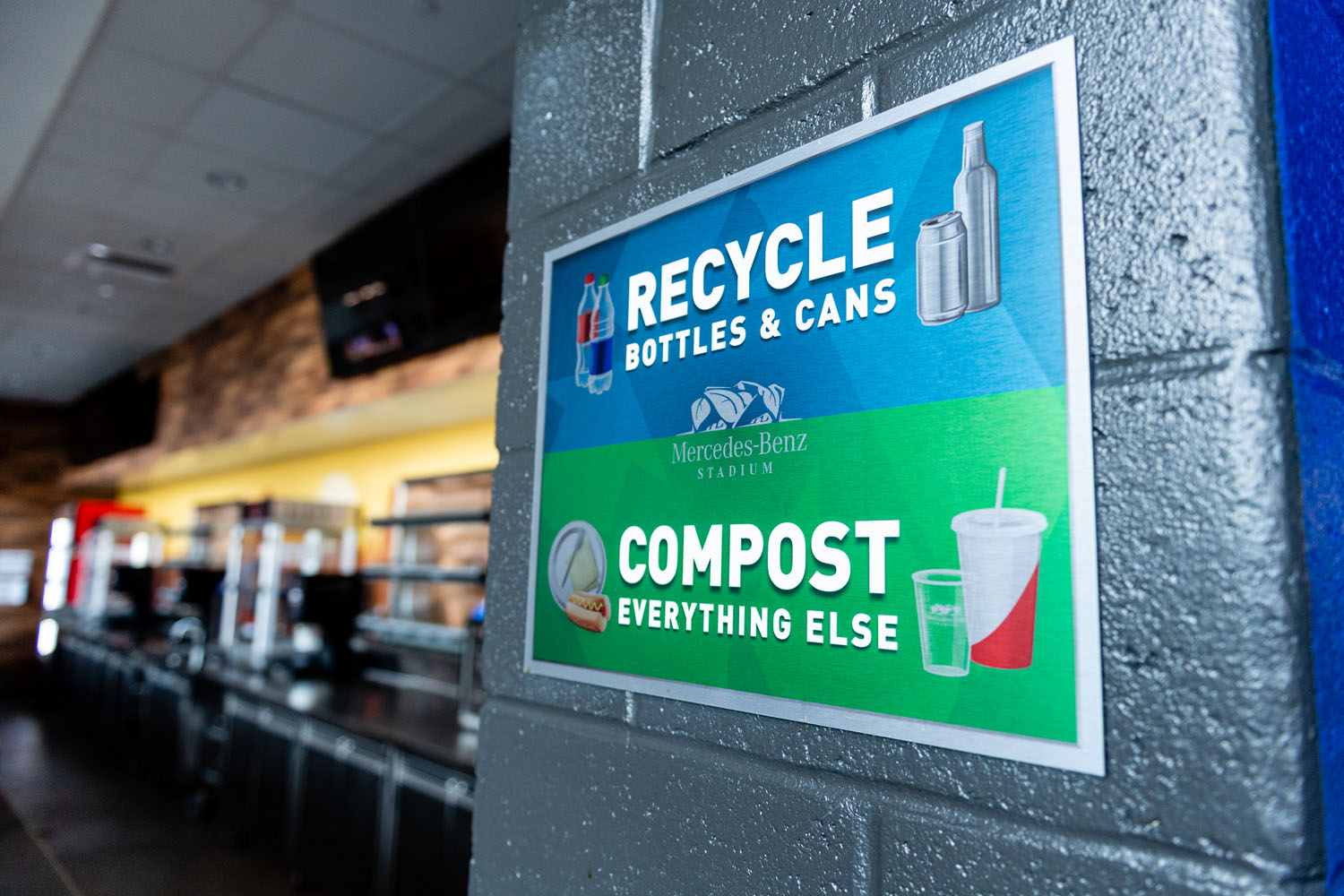
Scenes from the Zero Waste Playbook Shoot at Mercedes-Benz Stadium in Atlanta, Georgia, on Monday October 17, 2022. (Photo by Mitch Martin/Mercedes-Benz Stadium)

The best contamination strategy is not hoping the compost facility can sort it out later. It is designing the system so fewer wrong items enter the bin in the first place.

Compost contamination is too often treated as a downstream problem: something a hauler, sorter, or composter has to fix after the fact. But as Justin Senkbeil of CompostNow explained in a recent BPI video, the most effective contamination strategy starts upstream, long before the material ever reaches a facility.

“Our biggest strategy for managing contamination in our hauling programs has been to work upstream… we really had to set up our systems and our approach to prevent and screen out contamination before it gets to that facility destination.”

– Justin Senkbeil, CompostNow

Onboarding is Part of the Infrastructure
A successful compost program is not just a green cart placed by the back door. It is a comprehensive system that requires careful onboarding. As Senkbeil notes, this begins with understanding exactly what materials a customer wants to divert, and then advocating for a clean, strict accepted-materials list—often starting small and building trust.

This upstream approach turns a waste management contract into a communications and operations discipline. It requires a purchasing system, a signage system, a staff training system, and a feedback system working in harmony.

Procurement Can Either Help or Hurt
If an operator buys a confusing mix of conventional plastics, “lookalike” products, unverified compostables, and BPI-certified items, the front-of-house and back-of-house teams are being set up to fail. You cannot out-train a bad purchasing strategy.

Cleaner streams begin with absolute procurement alignment: choose packaging that matches the local composter’s specific acceptance list, rigorously verify certification (using tools like the BPI Certified Products database), and keep the product mix as simple and uniform as possible.
trash-cans-with-icons-sort-products_87739-113

Labels and Signs Are Not Decorations
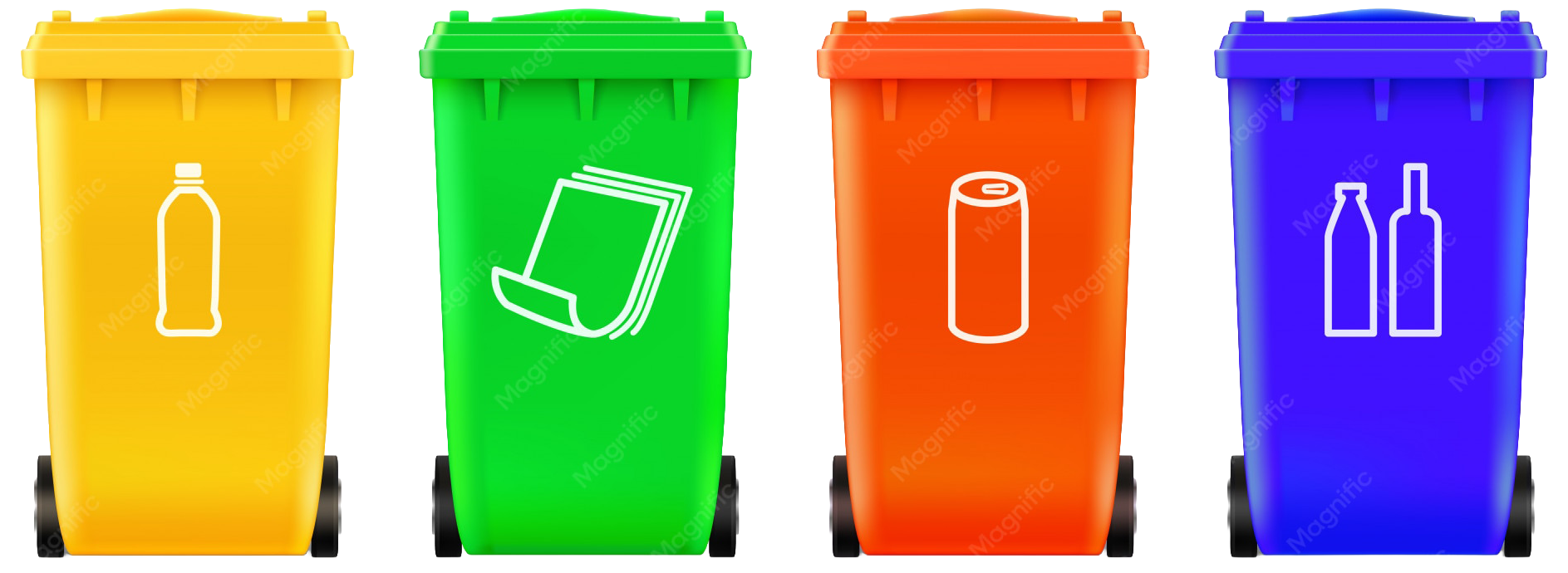
Compost bin signage has to do much more than look nice. It needs to reduce decision fatigue for consumers in a fast-moving environment. That means matching signs to the actual items in use at that specific location, showing clear photos where possible, and avoiding vague terms like “eco-friendly.”

As BPI notes in their blog post “Greenwashing vs. The Real Deal” (https://bpiworld.org/blog/greenwashing-vs-the-real-deal), relying on verified certification marks is crucial to help consumers distinguish true compostables from lookalikes.

Feedback Loops Matter
Upstream work does not end after launch day. Operators need continuous feedback from haulers and composters. Are certain items consistently showing up incorrectly? Are guests confused by a specific lid or cup? Are staff members defaulting to the trash bin because they are unsure? Every contamination problem is ultimately a communications signal indicating where the system needs refinement.

Use Better Earth packaging guides, BPI certification resources, and your local composter’s acceptance list to build a cleaner organics program from day one.

​The Better Earth Perspective
Better Earth supports operators by helping align product selection, certification, training, and messaging. The goal is not to sell a compostable item in isolation. The goal is to help that item fit seamlessly into a working program that captures food scraps, keeps conventional plastic out, and gives composters absolute confidence in the material they receive.

​Takeaway
Clean compost does not happen by accident. It starts with what operators buy, what staff understand, what guests see, and what composters accept. The cleaner the upstream system, the stronger the downstream result.

Contact Us

Let us know how our Better Earth team can further help you.
We look forward to hearing from you!

Our Locations

Atlanta

715 Park North Boulevard, #100
Clarkston, GA 30021
(844) 243-6333

Chicago

7447 S. Central Ave., Suite A
Chicago, IL 60638
(844) 243-6333

    This site is protected by reCAPTCHA and the Google Privacy Policy and Terms of Service apply.