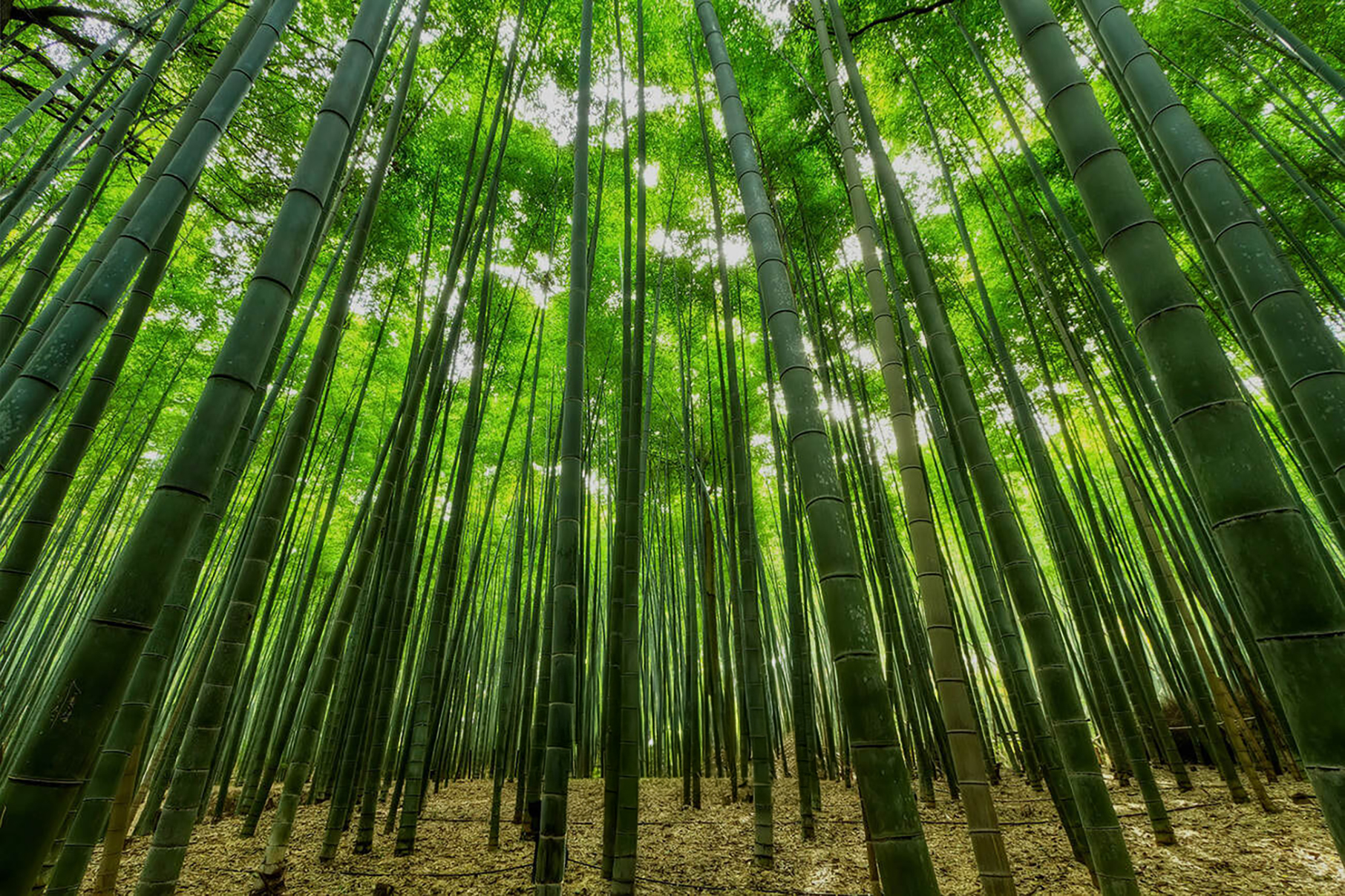

When you see the FSC® certification on Better Earth's products, it confirms that the packaging is made from bamboo or wood from FSC® certified forests and other responsibly managed sources.

Every coffee cup, takeout box, and paper bag has a hidden cost. Here’s why FSC® certification is one key to a better future.

Every second, our earth loses one and a half football fields of forest to deforestation. Every year, a forested area the size of Portugal is wiped out. If that doesn’t set off alarm bells, consider this: much of this destruction is happening just to produce things like paper cups, napkins, takeout boxes, and shopping bags — single-use products we throw away within minutes.

Forests aren’t just trees that help absorb carbon, produce oxygen, and regulate water and soil. They’re home to 80% of the world’s land animals and support over one billion people. Yet, we continue to destroy them at an alarming rate.

If we’re going to use paper (and let’s be real, we are), we have to be smarter about where it comes from. That’s where FSC-certified paper comes in.

Forest Stewardship Council, or FSC, ensures that paper and fiber-based products are sourced responsibly, meaning forests aren’t clear-cut, habitats aren’t destroyed, and Indigenous communities aren’t pushed aside in the process. FSC certification is the gold standard for responsible forestry.

So, what makes FSC paper different from conventional paper? And does it really make a difference? Let’s dive in.
The Impact of Traditional Paper and Packaging

Most people don’t think twice about grabbing a coffee cup, a paper bag, or a takeout container. But behind each one is a supply chain that’s often devastating for the environment:

  • 6.6 million hectares of forest disappear every year. That’s an area the size of Sri Lanka, lost annually.
  • Up to 6.5 million trees are cut down just to make the 16 billion coffee cups used worldwide each year.
  • 4 billion gallons of water go into paper cup production, enough to meet the daily drinking water needs of 54 million people.
  • 231,000 barrels of oil are used annually for the polyethylene linings in coffee cups, making them difficult to recycle.

And it’s not just about trees. Forest destruction affects climate change, biodiversity, and human rights. When we clear-cut forests, we not only eliminate critical wildlife habitats but also release stored carbon into the atmosphere, accelerating global warming. The stakes couldn’t be higher.

FSC Certification: What It Means and Why It Matters

FSC certification is like an insurance policy for forests. When you see the FSC logo on a product, it means:

  • The trees were harvested responsibly, with strict limits on how much can be cut.
  • High Conservation Value (HCV) areas, like rainforests and old-growth forests, are protected.
  • Indigenous communities and local workers are respected and included in the process.
  • Wildlife habitats are preserved. FSC forests have 2.7 times more large mammals than non-FSC logging areas.
  • The paper supply chain is transparent and audited, so there’s no greenwashing.

​FSC certification isn’t just for wood fiber, either. It applies to bamboo paper, recycled paper, and even alternative fibers. This means we can choose packaging that’s not only tree-free but also made from responsibly grown and harvested materials​.

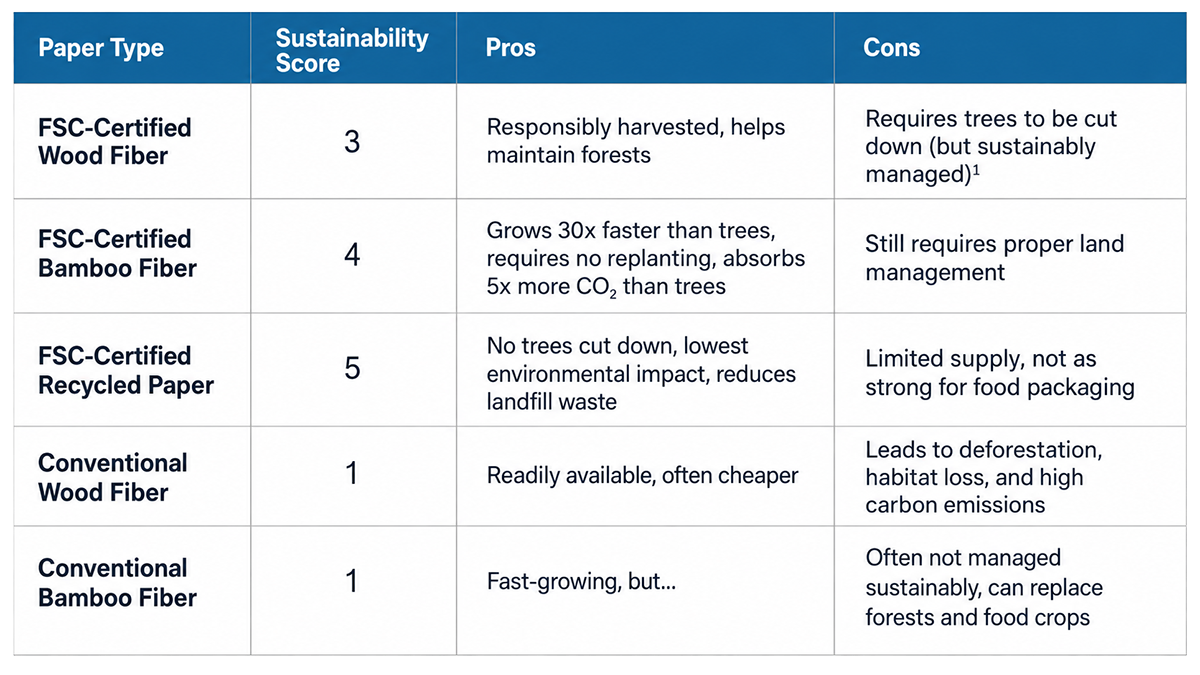
FSC Wood vs. FSC Bamboo vs. Conventional Paper
FSC certifies different types of fiber, but which is the most sustainable? Here’s how they compare:

Table comparing paper types: FSC wood, bamboo, recycled, conventional wood and bamboo fiber with sustainability scores, pros, and cons.

The verdict? 
FSC-certified bamboo and recycled paper are the most eco-friendly options, but any FSC-certified fiber is better than non-FSC alternatives. Conventional paper, whether from wood or bamboo, often lacks oversight, which means forests are cut down without accountability. FSC ensures that doesn’t happen.

Why More FSC-Certified Products Are Needed Now

Despite the clear benefits, only 13% of the world’s forests are FSC certified. That’s nowhere near enough to curb deforestation. However, if businesses, governments, and consumers demanded FSC-certified products, we could flip the script on forest destruction.
Right now, we have a choice:

  • Continue using conventional, non-certified paper, contributing to deforestation, climate change, and habitat destruction…
  • Or shift towards FSC-certified paper, protecting forests, wildlife, and Indigenous communities while still meeting our needs.

It’s a simple choice, but one that has massive consequences. Choosing FSC is one of the most direct ways to support responsible forestry, cut carbon emissions, and fight biodiversity loss​.

So, the next time you grab a coffee cup, a takeout container, or any paper product, look for the FSC logo. It’s one small action that, multiplied by millions of people, could help turn the tide for forests — and for the planet.

Contact Us

Let us know how our Better Earth team can further help you.
We look forward to hearing from you!

Our Locations

Atlanta

715 Park North Boulevard, #100
Clarkston, GA 30021
(844) 243-6333

Chicago

7447 S. Central Ave., Suite A
Chicago, IL 60638
(844) 243-6333

    This site is protected by reCAPTCHA and the Google Privacy Policy and Terms of Service apply.